Charles Nolan
  • Home
  • About
  • Non Fiction
    • FAQ
  • Blog
  • Poetry
    • Prayer (Chapbook Selections)
    • Selections from "Before There Was Language"
    • Monk in a Storm
    • The Wild Party
    • Pig
    • Runaway Slave
  • Songwriting
    • Song Lyrics
  • Contact

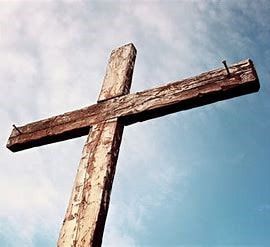
Some Thoughts on a Not So Good Friday

4/18/2025

0 Comments

 
Picture
 Today is the day on which believing Christians remember and celebrate the execution by crucifixion of Jesus of Nazareth. The word “celebrate” may sound strange applied to a story of betrayal, torture and painful death, all of which Jesus endured on this day.  The celebration is inspired by the belief that through his suffering Jesus redeemed the human race from the punishments God had inflicted on us for our sins. The believers are not celebrating suffering but redemption – though the unavoidable fact is you can’t have one without the other.
 
     Redemption involves suffering. It also involves hard work and, in most cases, some serious personal changes. Whether it’s scraping together the cash to get your late mother’s wedding ring back from the Pawn Shop or regaining the respect of a person or group you had needlessly offended, redemption means that you looked yourself in the face, didn’t like what you saw and did something about it.
 
     The sin Jesus was redeeming us from was the human race’s first disobedience, eating the forbidden fruit, which got us thrown out of paradise and made us subject to the human condition – things like pain, work, illness and death. God offering his own son to atone for this sin opened the door to us to escape from these mortal problems in a glorified afterlife. The condition (there’s always a condition) is that if we are to participate in Jesus’ redemption, we must take that hard look at ourselves and follow his teachings and example.
 
     While it’s up to each one of us to decide if this story is the core and foundation of our religious faith or a piece of religious mythology, we need to pay attention, especially today. Mythology should never be underestimated. Myths that last for centuries last because they’re telling us something important, something true. The truth is that that human race is just as much in need of redemption as it’s always been. To get specific and personal, the United States of America is as much in need of redemption today as the Children of Israel were under the heel of the Roman Empire. We’re living under an oppressive rule, and Jesus is nowhere in sight.
 
     So it looks like we’ve all got to be our own Jesus. We’re not looking to get into Paradise, just back to the American Democracy we made the mistake of taking too much for granted.  We’re going to have to lug a lot of crosses up a lot of hills to do it. Our starting point might well be a statement from the man who went to the cross for us – “The truth will set you free”.  That would be sticking to the actual, real verifiable unspun truth in all matters great and small and also, just as important, to the mythological truth of America, the land of the free. It’s the truth underlying that American mythology that’s at stake here.
 
     We need both more than ever on this not so good Friday. And a few real Christian values like kindness, mercy and treating all people as neighbors not enemies wouldn’t hurt either. Resurrection is going to take more than three days but we’ll get there.


0 Comments

About This "Life" Thing

4/7/2025

2 Comments

 
Picture
I’d like to address a few simple everyday questions:
 
Why is anything alive at all?
 
Why are some things alive and some things not?
 
Where does consciousness in living things (like us) come from and does it survive in some form after our physical death?
 
Like I said, simple stuff.
 
In today’s world, there are two major alternative (and opposing) answers to these questions – the “Religion Answer” and the “Science Answer”, though a third alternative that doesn’t have a name yet is slowly beginning to gain traction. We’ll get to that in a minute. Let’s start with the usual answers.
 
Alternative 1: The answer in the Western religions is that an all-powerful God made everything including us and that our consciousness is a gift “He” gave us by creating us in his “own image and likeness”. Lower forms of material (rocks, soil, water) were not given life. Plants and animals were given life and animals were given consciousness, but in a lower form than ours. Our consciousness, usually called the “soul”, is the center of our being and could be considered “who we really are”. Our souls are connected to our bodies but can be led astray by the body’s physical desires for sex and material goods. Prayer and following the church’s rules (the 10 Commandments for instance) can help us resist the body’s urges. The soul survives after death and will enter a place of paradise or punishment depending on how well the individual has followed God’s rules while alive. The “meaning” of human life is entirely tied in with our relationship to God and our following of God’s plan for us.
 
In many Eastern religions, the soul is distinguished from the body and can be led to a state of unrest by those same “earthly” desires or “cravings” as well as dissatisfaction with our condition - such things as aging, illness and death. While no all-powerful God is behind it all, the soul’s goal is to achieve a state of inner peace or “enlightenment” which will release the person from the cycle of birth and rebirth.
 
 These views have more in common than not despite their surface differences. With or without a divine overseer, humanity is seen as out of synch with the surroundings of our material nature and in need of redemption. Death in both belief systems is also seen as a transition to better or worse conditions based on how well or badly the current life has been lived.
 
Alternative 2: The second “scientific” alternative, is that life, like everything else in the universe, evolved out of the interaction of matter and energy and follows clearly definable laws, such as the law of gravity. The big bang happened as a natural process and not because an almighty intelligence decided to push the button. Life is an accident caused by the effect of the sun’s light energy on cells in our planet’s ocean.  The development of increasingly complex life and the emergence of consciousness is simply the result of the survival value of these traits. Life, like everything else in the Universe, begins, thrives for a while, then goes out of existence. “Meaning” is a human concept that will either enhance an individual’s life or cause discomfort depending on how the individual deals with it. It’s a private matter with nothing eternal behind it.
 
Alternative 2.5 “Intelligent Design” is essentially Alternative 1 using elements of Alternative 2 to make its case for a guiding intellect behind creation. The question of course is whether intellect created the process or the process created intellect. Which brings us to:
 
Alternative 3: The third alternative, which has yet to have an official title or organization to promote it, but which is peeking out from between the cracks in the day to day lives of the majority of homo sapiens, is the idea that while the realities of biology, birth and decay are operating without an almighty hand at the wheel, there’s more going on here than meets the eye. The rise of the idea “spiritual not religious” as a self-identifier reflects this notion. Many individuals and groups both formal (the Unitarians for instance) and informal (any number of “New Age” and self-help groups) have expressed a sense of an “inner life” than can transcend the messy realities the “real world” keeps throwing at us. There are also elements of this approach in Buddhism and Taoism, which advocate individual spirituality without an almighty overseer.
 
The question of course is “Does our sense of an inner life indicate a connection with a higher reality or is it just a function of our unconscious minds, unconnected to anything but our own thoughts, feelings and memories?”
 
As someone once said, “Elementary my dear Watson.” This is a big question, possibly the big question. The reason we bother to ask it is because of some major problems with both the religious and scientific alternatives.
 
The most troubling thing about the religious alternative is that it has been used throughout human history to put a great deal of power into the hands of the people who claim to speak for the almighty, be they representatives of “official” faiths or cult leaders. The message is “Obey our rules or God will burn you in hell”. In addition, the clash between religious mythology and documentable historical and scientific fact has done a lot, especially in recent years, to undermine religion’s credibility.
 
The most troubling thing about the scientific alternative is that it portrays human life as a meaningless accident, an “absurd” event in a mindless universe. If our being here at all is pointless flip of nature’s coin, what does it matter what we do?
 
Alternative #3 looks for a middle ground between these two and is really very simple. It’s easy to forget that the universe is primarily energy. Matter is a passenger on the energy bus. Life is essentially a form of energy – those cells in the earth’s ocean were energized by the sun’s rays and started twitching around and reproducing – and the rest is history. Consciousness arises in the more complex energy systems – the more the complexity, the higher the consciousness – compare a single celled organism with 100 billion celled human brains. 100 billion cells at work means there’s a whole lot of energy going on - with the dual task of operating the unconscious systems (things like breathing and digestion) that keep us alive while also fueling our conscious and unconscious minds - the more the complexity, the more the energy.
 
Let’s ride this train of thought a little further. What is the most complex thing in the universe, containing the most energy? That would be the universe itself, which contains all the matter and all the energy in the universe.  And now for the big “what if?”.
 
What if the universe is alive? Alive and conscious of itself in a way that is beyond our understanding - pure energy, pure thought and the root source of our energy and thought - but no more conscious of us than we are of the millions of bacteria that help us digest out food? We’re in that consciousness, it runs on the same energy that’s keeping us going – in fact, it is the energy that keeps us going - it grows, it changes, it came into existence and will go out of existence, though in a much larger timeframe than we or the planet we live on.
 
This idea has been around in different forms for a long time in both Eastern and Western thought – Pantheism, Deism, and what is sometimes called “Secular Theology” all reflect elements of this idea. The twist I’m suggesting is that while the life force of the universe created us and in effect is us, this consciousness has no expectations of us and certainly has not delegated power or authority to tribal leaders, the Pope, the Taliban or the Christian Right to run our lives. The direction of our lives is our choice and our problem – a notion that is as liberating as it is terrifying. In short, the universe is alive but not divine. We’re on our own – or are we?
 
Prayer has been around as long as homo sapiens – that sense of being in touch with a larger realty, and of drawing strength from it. Meditation is a variation on the same idea, and it’s benefit for both psychological and physical health have been amply demonstrated. The idea that it’s not “all in our heads” but a way of getting in touch with the real force behind things could bring a sense of comfort to our frequently troubling situation.
 
I’d say we need all the help we can get.


2 Comments

Common Ground

12/31/2024

0 Comments

 
Picture
   I am probably not the first one to notice the common ground in the “Origin” stories of both “Judeo/Christianity” and Buddhism.
 
   I use the term “Judeo/Christian” in this context because both Jewish and Christian faiths share the same creation mythology with the book of Genisis. Despite the divergent and bloody paths (mainly for the Jews) the two faiths have taken in the years since Jesus of Nazareth preached on a hillside in Galilee, the core mythology of the Garden and the fall has endured. The Christian Right still disputes scientific information that challenges the Genisis timetable, for reasons that I think this study will illustrate.
 
   In Genisis, the first man and woman start out in a state of naked innocence, in an environment protected by a loving parent. All their needs are met and they are, as far as they know, immortal. After eating the forbidden fruit of “knowledge of good and evil” they are punished by the parent with expulsion from the Garden into a world of hunger, aging, the need to labor for survival, pain in childbirth (labor again) and, biggest of all, death – “Dust you are and to dust you shall return”.
 
   In the story of Siddhartha Gautama, the young Buddha is raised in a protected environment by a loving father. He gains “knowledge of good and evil” when he leaves the protected environment and for the first time observes aging, illness and death.
 
   Here is where the stories diverge.
 
   Adam and Eve are forcibly dispelled from the Garden by their angry parent. Their only way “back in” is by obeying the Parent’s commands and, in the Chrisian tradition, pledging their faith to Christ the Redeemer who will set them free in the afterlife from labor, disease, aging and death by admitting them to heaven. The hardships of life are seen as the result of human sin, not as the natural course of things.
 
   As opposed to Adam and Eve, Siddhartha Gautama, chooses freely to leave the protected environment of his father’s palace and to share in the harsh realities of his fellow sufferers. Instead of retaining the privileged life of a Prince, he chooses the life of an aesthetic, a life of prayer and poverty. The hardships of life are seen in this tradition as the natural order of things, not as a punishment. Being “set free” means attaining a state of inner peace or “enlightenment”, not escaping to a more comfortable afterlife.
 
   Where the two traditions reconnect is that Jesus, the son of God, is also seen as freely choosing to leave heaven and share the lot of sinful mortals in order to offer them a chance at salvation, much as the Buddha left his comfortable palace to find inner peace and share it with as many people as he could reach.
 
    So what does all this have to do with the price of eggs? Just about everything.
 
   What humans choose to believe - what reverberates with our inner needs – tells us a lot about us. Since humans first began to think and communicate symbolically, through words and works of art, we have struggled with the principal problem of human existence – the sense of feeling like disembodied souls housed in bodies that sicken, age and die. Using our ability to turn ideas into working tools, we have moved from the cave to the condo, from walking barefoot on rocky ground to flying coast to coast in a few hours – but the basic problem remains. Our comforts can distract us from our underlying problem but they can’t fix it. No matter how many times modern medicine cures you, both you (and your doctor) will sooner or later wind up dead.
 
   Through most of human history, religion in its many forms has been our way of dealing with this problem. As we enter what I have described before as the “post religious age”, fewer and fewer of us are able to take this traditional route, despite a great deal of push-back from conservative religious groups, who quite accurately see their way of life as threatened.
 
   My suggestion is that we not throw out the baby with the bathwater. The religious traditions that have reverberated with millions of us over the centuries have much to tell us about us and should not be ignored.
 
   In the stories of Jesus and Buddha, we see an approach to the human condition that is as valid as it was when these beliefs were formed. Both see the human condition for what it is. Both offer a religious leader who embraces the human condition rather than hiding from it. Both reject the acquisition of wealth and power as a symbolic way of denying the human condition for oneself - a tendency that has caused most of the harm done by humans to each other. And both offer a way in rather than a way out as the way of dealing with the strange hand we’ve been dealt.
 
   The way out is wealth, fame and the ability to push other people around, or the more easily available bottle (pill or liquid, take your pick).  The way in is to connect to the inner place where our sense of selves come from and may be, as virtually all religions have suggested, a part of something much bigger than any or all of us.
 
 Buddha and Jesus were on to something. What they most have in common is their wish to share it. Maybe it's time we took them up on it.


0 Comments

Politics, the Truth and Buddha's Tooth

12/18/2024

0 Comments

 
Picture
​Last week I noticed an interesting event in the news. The Government of China loaned Buddha’s Tooth, a sacred relic, to the government of Thailand in honor of the Thai King’s 72nd birthday and to celebrate 50 years of diplomatic relations between their two countries. The tooth, one of many believed to have been preserved after Siddhartha Gautama, the original Buddha, passed away and was cremated somewhere between 400-500 B.C., is kept in a Peking shrine. The tooth, enclosed in a golden container, was welcomed to Bangkok with a procession through the streets. It will be housed in a local temple for the next several weeks.
 
        What’s interesting, of course, is that China is an officially atheist country. Using a religious symbol in their diplomacy would seem at first glance to be a contradiction. When you look closer, however, the historical link between religion and politics stands out loud and clear. Religion, like politics, is all about identity. While China recognizes five religions: Buddhism, Taoism/Confucianism, Catholicism, Protestantism and Islam, this recognition is given only as long as the believers of these faiths do nothing to question their political identity as members of the People’s Republic of China. For the most part, the believers, who make up 70% of the Chinese population, appear to be able to live with this arrangement, making China the world’s largest example of the separation of church and state.
 
 The notorious exception was a 2014 separatist movement by a Muslim sect in Xinjiang in northwestern China. This movement was answered with a harsh military response, the destruction of mosques and the creation of “reeducation camps” in which Muslims were imprisoned and thousands died. The message was obviously not lost on the rest of the population, who have continued to keep the peace.
 
        While Thailand has no State Religion, almost 95% of the country’s population identify as Buddhist. In fact, Thailand has the second largest Buddhist population in the world, after China, which has the largest. By sharing the Buddha’s Tooth, China is not only firming up their relationship with Thailand but also keeping their millions of Buddhists happy – a win/win for the People’s Republic.
 
        It is worth noting that Buddhism is non-theistic. Buddhists do not acknowledge a supreme being. Buddha is revered as a teacher, not a God. However, his tooth was given the same reverence that the crown of thorns believed to have been worn by Jesus on the cross was given during the same week on its return to the restored Notre Dame Cathedral in Paris. While France. A historically Catholic country, also has no official religion, Notre Dame is a central symbol of French identity and millions of dollars were spent to restore it.
 
        Whether the tooth actually came from the Buddha’s mouth or the crown of thorns from Jesus’ head is almost beside the point. It’s all about belief. Symbol trumps information, faith trumps fact (an odd verbal coincidence given current political realities). It’s about human identity and our ongoing need to see ourselves as more than the sum of our biological parts. Dying for your country or for being martyred for your faith is better than dying for nothing (that would be heart attack, a traffic accident, or, worse of all, natural causes). Nobody honors the grave of the unknown smallpox victim. The truth behind the myth, be it political or religious, is outweighed by the need to believe. Evidence-based science has shaken things up as the cost for providing us with light bulbs, air travel and medicine but the need to believe goes on. Political leaders who are able to tap into that human need have been using it to their advantage since the stone age and continue to do so in the age of the internet, which is where I learned about both Buddha’s tooth, the reopening of Notre Dame and, of course, the recent American election.
 
And why am I raising all this? Because the game’s gotten critical. It’s always been dangerous and is responsible for most of the war and oppression in our race’s checkered history. And in an age where decisions by one country can affect the world, the level of risk has risen substantially. Even the Buddha would have a hard time making peace with it.
 
We have a lot of work to do. More to come.

0 Comments

The Four KInds of Belief

11/19/2024

0 Comments

 
Picture

        As I see it, there are basically four different kinds of belief. To be clear, what I mean by “belief” in this context is “opinions about a higher power”. I distinguish between this notion of belief and that of “faith”. The two words are often used interchangeably but the difference is important.
 
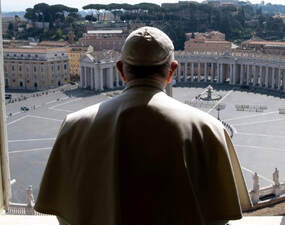
Every human born needs faith to get through their lives – a sense of expectation that things will work out well, sometimes despite the evidence. Call it the spiritual side of confidence. An atheist needs faith as much as the Pope does if only to get out of bed in the morning. The Pope also needs belief, as do many human beings for whom faith is not enough.
 
Belief #1: An all-powerful God created the universe and everything in it. He has requirements for human beings and will reward or punish us in the afterlife depending on how well we follow those requirements. These requirements have been revealed to my particular organization. Those who do not follow God’s requirements as taught and practiced by my organization are infidels at worst or in the least simply mistaken.
 
Belief #2: “God” can be considered the life force behind what we perceive as reality. We humans are not capable of fully understanding God but can reach out to him/her/? with our minds and hearts. All religions are attempting as best they can to reach out to and understand God and their beliefs should be respected unless these beliefs inflict harm. Humans can achieve some level of communication with God through private meditation and, if it feels right to the person, through group rituals within formally recognized religions or informal groups of like-minded individuals.
 
Belief #3: There is no such things as God. The universe evolved from pure energy according to scientifically measurable laws and there is no conscious mind directing it. Those who continue to believe in God are simply subscribing to old myths in order to deny their mortality or, in many cases, to maintain control over their fellow believers.
 
Belief #4: I don’t know if there is a God or not. Since this has little or no effect on my day-to-day life, I don’t really give it much thought.
 
*
 
        “Belief #1” would cover most of what we call organized religions. Organized religions base their beliefs on what they consider revelations from God to chosen individuals. At its origins, this form of belief was closely tied to and identified with specific tribes, groups or nations and their God’s rules were the foundation for the group’s laws. Originally, there were thought to be multiple Gods, with “our God” being considered superior to the gods of other groups. The early parts of the Bible’s Old Testament reflect this view – the God of the Jews, for instance, was portrayed in the Exodus story as superior to the gods of the Egyptians - and His first commandment forbade the worship of other gods. As monotheism developed, this view evolved into the idea that “There is one God but He favors our group”. In the modern era, most organized religions have adopted the tolerance typical of “Belief #2” towards other religions and see cooperating with each other and sometimes praying together as a positive thing. However, there has been a recent resurgence of strict “Belief #1” in the Muslim world and, ironically, in the United States, whose founders virtually created the idea of religious tolerance.
 
“Belief #2” is what used to be called “agnostic” but with a definite leaning toward believing in “something out there” without being bound by the doctrines of a specific creed. Unitarianism, New Age activities and non-deistic faiths like Buddhism or Taoism would fall into this category. A general tolerance of the beliefs of others as “fellow seekers” is the general practice in this group. They tend to view an attitude of benevolence and compassion toward all human beings as the correct way to live but are for the most part ready and willing to defend themselves if attacked or treated unfairly. Their countries are seen as governmental entities established to maintain order for the group, with no divine sanction one way or the other.
 
“Belief #3” is what is usually referred to as atheism. It rejects the idea of God as a foolish and outdated notion. Large political movements like Russian and Chinese Communism adhere to this belief and see religion as a device that was used to keep the oppressive ruling classes in power in earlier times – though they have for the most part replaced the idea of an all-powerful God with the idea of an all-powerful State. These States for the most part do not forbid religious activities as long as it does not interfere with the government. Individual atheists are for the most part tolerant of their believing neighbors – no atheist has ever burned a believer at the stake.
 
“Belief #4” is a growing faction in the modern world – people who haven’t given the idea of God much thought and don’t much care about it one way or the other. Many of the younger generations in developed Western countries would fall into this group and, along with members of “Belief #2”, are largely responsible for the growing decline in church attendance that has become alarming to the adherents of “Belief #1”.  They have not made the “commitment to unbelief” that atheists have. They see no reason to make a commitment one way or the other and take the general attitude “I’m going to die anyway and if there’s something ‘out there’ I’ll find out then – in the meantime what’s for lunch?”.
 
Any reader who has stuck with me this far will likely have two questions.
 
1. “This is an interesting intellectual exercise, but why are you bothering with it?”
 
2. “Where do you stand, Mr. Author? Which of these belief groups do YOU belong to?” In other words, put up or shut up.
 
*
Question #1:
 
        I am bothering with this examination of belief because the issues underlying it are tearing the world apart. Humans need faith. Reality is not enough. When circumstances begin to erode the mythologies that have sustained us, we either become depressed or fight back. When our faith is intermixed with and supported by our beliefs, we will fight all the harder when we see that they are being threatened.
 
The first dramatic example of this in modern times was 9/11, when Muslim Fundamentalists sacrificed themselves to slam aircraft into buildings they considered symbols of the West’s encroachment on their world. This was as much a religious act as a political act if not more so. Since then, after a series of wars in which Western counties unsuccessfully attempted to help more modern thinking Muslims gain control of their countries, conservative groups like the Taliban have pushed these countries back to Sharia Law with requirements, especially for women, consistent with the practices of long gone centuries.
 
In a surprisingly related trend, the recent American election was heavily influenced by religious groups who saw the decline in church attendance and widespread tolerance for sexual and gender choices as a threat to their version of “The American Way of Life” and “God’s law”.
 
In a throwback to the book of Exodus, the conflict between Israel and its Muslim neighbors that is causing death and destruction in Gaza is partly one of religious differences, since both sides are members of the semitic race. The notion “My God is stronger than your God” is alive and as dangerous as ever in the 21st century.
 
Since I began writing this piece, the Catholic Archdiocese of Chicago has paid out over $800 million to settle claims of child sexual abuse to over 1,300 surviving victims. The Archbishop of Canterbury has resigned due to fallout from a sex scandal as well. Speaking of England, less than half the residents of Great Britain actually belong to the official “Church of England”, with regular church attendance down to less than 3% of the population.
 
Overall, the sense of an all-powerful God overseeing our activities is fading into the past. Secular reality and our political leaders are doing a damn sad job of replacing it. We are overwhelmed with information and offered few ways to make any sense out of it all or to influence events that effect our lives.
 
We are badly in need of FAITH - we meaning all of us. In many ways, our faith is our identity. Without it, our sense of who we are and who we stand with can get very blurry. At this moment, half the United States dislikes and is afraid of the other half and the feeling goes both ways. And “God help us!” is a call without a phone number.
 
So now what?
 
Question #2 (Put up or shut up):
 
        For the first 21 years of my life, I was a fully committed member of the “Belief #1” group. I was a devout Catholic and had planned to spend my life as a missionary priest, bringing the Gospel to people in far off countries who had not yet heard the good news.  During the many years since, I have moved back and forth between the other Belief options outlined at the start of this piece. At this point, I find myself in the only camp that seems to hold out some hope of talking our species out of destroying itself in the near future. That would be “Belief #2”, with a few variations. My reasons:
 
        #1 “Our God is Better than Your God” has caused a great deal of war and oppression throughout history and has fueled the tribal conflicts that still divide us. God doesn’t really take sides.
 
#3 “Atheism” has little to contribute except that they disagree with what the churches are preaching – but thinking we can get out of this mess all by ourselves is not supported by the evidence.
 
And #4 “Not caring one way or the other” isn’t a sensible option when you’re drowning.
 
Which leaves us with #2 – the sense that there’s more going on here than meets the eye and that we’re part of something bigger than us that can go either well or badly depending how we interact with it.
 
A while back, I wrote a piece on “The obvious will of God” which noted that all things in the universe, including the universe itself, are in a constant process of coming into being, growing and thriving for a time, then fading away, passing on their energy and whatever’s left of their matter to fuel the next go-round. Making peace with that reality (as opposed to trying to cheat your way out of it) is one of the strong points of Belief#2. There is a consciousness bigger than us in which we can share and participate once we drop our real and symbolic swords and start working with it. Simply put, there’s a world of difference between “prayer to” and “prayer with”. 
 
There are no guarantees in this approach, no firm rules or favored groups. Just us, all of us. And whatever it is that put us here. Getting in touch with it means getting in touch with US. The vast majority of species that have inhabited our little piece of rock are long extinct. How soon we’ll join them is pretty much in our own hands, barring a really big meteor.
 
The good news is that the same faith that held up our beliefs is still with us, with or without them. We’re not going it alone. We’ve got something brimming under the surface that’s got a GPS with no satellites needed.  Reading it’s the trick. It requires what they used to call it a “Leap of Faith”.  A few years back I found another name for it, or you might say it found me, a name that suggested that the only way to win this gamble is to cheat our way to the truth – the Holy Bluff.
 
More to come.


0 Comments

The Things We Do for Faith

6/28/2024

0 Comments

 
Picture
 Religious Faith is Having a Strange Week.
 
  1. Over 1,000 pilgrims have died of the heat while attempting to visit the sacred shrine in Mecca.
 
  1. An International Rights Organization is asking for help to stop the execution in Pakistan of a young Christian man charged with blasphemy for comments he allegedly made in a private conversation when he was 16.
 
3. The State of Louisiana is ordering that a version of the Ten Commandments (in English, obviously) be posted in all public classrooms.
 
The relationship between number two and three hits you in the face. “Blasphemy” would be the commandment “Thou Shalt not Take the Name of God in Vain” taken to its extremes, which it has been, many times through history. What Blasphemy really means is “Thou Shalt Not Disagree with Our Official Version of Things”. God has nothing to do with it. William Tyndale, the man who first translated the Bible into English, was burned at the stake for it and, not to forget the big one, blasphemy was one of the charges that led to the conviction and execution of Jesus of Nazareth. It’s a power game and always has been.
 
The fact that such things are still being done by organized governments in a world that has the internet reporting on them pushes the boundaries of belief to say the least. The fact that a posting of a specific version of the commandments is being required in a country built upon the separation of church and state is almost incomprehensible - and this particular State Law was in part enacted with the intent of inspiring legal challenges that will place the very foundations of the First Amendment in front of a conservative Supreme Court. Louisiana isn’t yet threatening to execute anyone who tears the commandments off a classroom wall, but they’re opening a door to the same kind of thinking that would. This brings us to number one.
 
All Muslims must make the Hajj pilgrimage at some point in their lives. Several million do each year. Arabia is a hot country, but when the practice of the pilgrimage began, modern industry, fueled in part by fossil fuels taken from the ground beneath that country’s sand, had not pushed the temperature to a point of human fatality. The fact that the pilgrims come anyway, despite the temperature, speaks to the force that’s driving all three of these events: the human NEED TO BELIEVE.
 
Simply put, our biology isn’t enough for us and never has been – not since the first artist drew a picture of a deer on a cave wall in the hopes it would help his tribe in the hunt. Just being alive isn’t enough. We need to feel a connection to a higher power, and to share in that power. “With God on Our Side” isn’t just a song. It’s what’s driving Pakistanis to kill a teenager, Louisiana politicians to declare their beliefs as “The American Way of Life” and Muslims to put their mortal lives at the mercy of the elements.
 
 That force is responsible for much of the damage humans have done to one another through history – wars, persecutions, dictatorship, slavery. It is also responsible for most of the good - acts of kindness and mercy, art, music and oddly enough, science – human ingenuity twisting nature into doing things our way, from agriculture to light bulbs to space ships. It all comes from the same place – religion, science, everything that makes us human.
 
We can’t live without faith. None of us can, or do. Harnessing that human need to believe is the challenge of our times. We need to harness the negative side, the drive to force others to believe as we do, before it takes us into a new Dark Ages - and the positive side, before our scientific ingenuity makes our entire planet as unlivable as Mecca was for so many pilgrims.
 
We have a lot of work to do.


0 Comments

Thoughts on Good Friday

4/8/2023

0 Comments

 
Picture
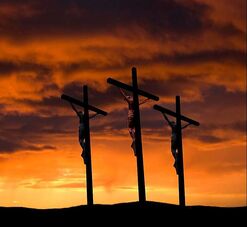
       The cross is perhaps the most recognizable symbol on earth.  Whether it’s a plain cross (sometimes called an empty cross) or a crucifix bearing the image of crucified Jesus, it immediately identifies the person wearing it or displaying it as a member of one of the Christian faiths. The cross atop the village church is, in many places, the first thing you see as you approach the town borders.  Despite the fact that the cross was an instrument of grisly torture and execution, it is universally taken as a symbol of redemption and divine forgiveness. The feast of Good Friday celebrates this.
 
        In the raw history of it, Jesus of Nazareth was arrested and executed because he challenged the church/state collaboration that was oppressing his people. Crucifixion was reserved for special criminals, those who were seen as a threat to the social order, which at the time was completely top heavy – the masters were in charge, everybody else served them and God was definitely on their side – the poor were poor because they were meant to be poor. Aside from the intense pain inflicted on a criminal by being nailed to a piece of wood by the wrists and strung up so the victim’s own weight would put pressure on the nails and keep the pain going, there was the message: “this is what will happen to you if you step out of line”. The cross wasn’t on top of a hill by accident - the rulers wanted everybody to see the consequences of crossing the masters.
 
          The way the cross of Jesus completely flipped the symbolism has to do with two things.
 
        The first is the Christian belief that Jesus was divine, sent by his heavenly father to take on human form and suffer death as a way of freeing the human race from the burden of our sins. Our sins were a barrier between us and God – God tore away the barrier in the most dramatic way possible. The resurrection of Jeus confirmed this and opened the way to redemption to all believers who would accept the message.
 
        The second is a bit less obvious. In the vast majority of instances, Jesus on the cross is depicted with the nails through his palms and his hands wide open despite the fact that the nails of crucifixion went through the wrists. Nails through the palms would have torn through the hands and dropped the criminal on his face as soon as the cross was raised.  In this case, however, the message is more important than the facts (it frequently is). The choice of depicting Jesus on the cross with his hands and arms open wide changes the message from one of suffering to one of acceptance and welcome. Jesus triumphs over death by accepting and welcoming it – making good on the promise of Gethsemane: “Not my will but thine be done, Oh Lord!”.
 
        With Jesus, we transcend the human condition by embracing it, not by denying it. The fact of the matter is that only energy is eternal. All matter, living or dead, from the tiniest bacteria to a distant sun a hundred times the size of our own, is in a constant process of coming in and going out of existence. Attempting to deny this and seek symbolic reinforcements for a false sense of immortality (those rulers who crucified Jesus, for instance) is the root of human evil. Accepting our temporary condition as the will of creation and making peace with its limits is the source of all that is good in humanity. The Good Friday image of a god accepting his own death is an image that goes to the heart of human consciousness.
 
        Have a good Friday.

0 Comments

Christmas in a Pandemic

12/26/2020

0 Comments

 
Picture
   As far as the externals go, this Christmas is different than any other in our shared lifetimes. Services in church, gatherings with family members. opening presents together, the big dinner at the home of whoever has the biggest table – all of these holiday traditions have become downright dangerous.

   On a deeper level, celebrating the birth of the Savior in the middle of a worldwide plague - with the latest surges and death counts hitting us in the face with every day’s headlines - raises the inevitable question: who’s going to save us from this? 

   On paper, we’re counting on science – vaccines, mainly. But science isn’t enough. The fact is, science created the problem. Increasing human population sizes plus the widespread availability of international travel made it possible for a virus that got its start in a Chinese market to fill a mass grave just outside New York City. Don’t get me wrong – I’ll be the first one on line when the vaccine becomes available in my neighborhood. But it’s going to take more than that to get us through this. Under it all, it’s a question of faith.

   I’ve heard it from any number of believers: “God’s trying to get our attention”. That’s hard to argue with. I’m not going to bother. Someone or something is trying to get our attention and we’d better damn sure pay attention. And what has Christmas got to do with it? Everything.

   To get down to basics, what is the Savior supposed to be saving us from? The answer is simple – ourselves. At the time Jesus was born, illness, misfortune and death were all held to be the result of human behavior having angered an all-powerful deity (or several competing deities depending on your group’s position). Anything resembling modern medicine was over a thousand years away, the earth was a fairly flat place on which we lived, and the sun, moon and stars were there to provide us with varying degrees of light. I’m bringing that up because, despite having received scientific information to the contrary, that us-centric view is still our actual life experience. The sun rises, the sun sets. The stars twinkle. The number of humans who have gone high enough into space to observe the earth revolving around the sun with their own eyes wouldn’t fill a small town church.

   In the gospel accounts, Jesus the Savior healed the sick with the words “Your sins are forgiven”, not, “Take two of these at bedtime”. And the key to earning Divine forgiveness, and, with it, our release from the crueler side of biology, was in learning how to forgive each other. It‘s a message that’s hard to miss – that “Love one another as I have loved you” thing. It has nothing to do with St. Peter’s Cathedral or the latest televangelist to cash in on the human need to believe. It’s all about how we treat each other and has everything to do with us a species getting though this latest trial.

   The most admirable human beings in this struggle have been those who made the benefits of medical science possible for the sick by risking their own lives to provide them – those we call “front-liners”.  Medicine is useless without someone with the guts to administer it. And if we’re really going to get through this, we’re all going to have to be front liners. If our country is fortunate enough to have a working vaccine, but there are places in the world who don’t, the virus will be free to keep mutating until it turns into something our vaccines can’t stop.  This may sound like getting ahead of ourselves, but we could have saved a lot of lives by getting ahead of ourselves the minute this thing started.

   The Savior’s message – that we have to love EVERYBODY is the best shot we’ve got - locally, nationally and globally. While we’re spending millions to celebrate the birth of a child who was born in an animal pen, poorest of the poor, we can’t forget what he stood for. Whether Jesus was the Son of God or a human being like the rest of us who got it, we need to get the message.


0 Comments

The Founding Fathers – Let’s Get Real

9/23/2020

4 Comments

 
Picture
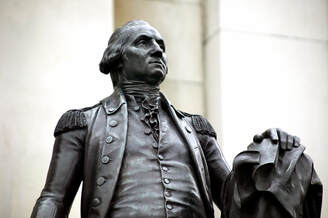
In the effort to discredit the historical standing of Confederate Generals and a handful of champions of overt racism, we may be at risk of throwing the baby out with the bathwater. The baby in this case is the Historical Foundation of American Democracy. Tearing down Jefferson Davis’ statue is one thing. Tearing down George Washington’s is another. In between a picture of America as “racist and evil” and a picture of America as “exceptional and blessed by God” there is a picture  that far outweighs either

 position – the truth. 

          The truth is that the man whose pen wrote the words “all men are created equal” was a slaveowner. The truth is that it would never have crossed the minds of the men who signed the constitution to let their wives vote. But it is just as true that without their gigantic first steps none of the liberties that have painstakingly followed would have been possible.

          America didn’t invent slavery. Slavery has been a fact of human life from the time of the Agricultural Revolution (about 3,500 BC) and the leap agriculture made possible from small tribal societies to the first nation-states. Large, powerful states conquered smaller, less powerful states and enslaved their populations, their entire populations. Some wars were started simply to obtain additional slave labor for large projects – Pyramids anyone?

Slavery was based on two underlying concepts:
​
  1. The other, either racially or tribally, is inferior to us and deserves to be a slave. 
  2. It’s this way because God wants it this way. In the early days, it was simply that “Our Gods are stronger than their Gods”. As monotheism took hold, that stance was slightly modified to “There is only one God and he likes us best”.

        These two concepts also supported feudalism and colonialism. Simply put, the people in charge have the right to do what they want with the people who are not in charge. The many who are powerless work for scraps to support the lavish lifestyles of the few who are powerful. And it’s this way because God wants it this way. The “Divine Right of Kings” was not a metaphor.
​
          Organized religion, which evolved at the same time as the larger states, supported and, in fact, created this system. Church and state were joined at the hip. Many of the first kings were also their country’s high priests. The first challenge to this system came from Jesus of Nazareth, who dared to suggest that the smallest of the small were as beloved in the eyes of God as the richest ruler. The system saw him as a threat and dealt with him mercilessly, but the word was out and would not be stopped. It was, however, contained. Christianity was absorbed into the mainstream of organized religions. Nation states continued to exist, the nobles continued to tax the peasants and less developed countries were looted to enrich the ruling and merchant classes of “Christian” countries with navies and gunpowder. America was no exception to this.

       The original inhabitants of the Eastern Seaboard of the United States were driven out by a combination of bullets and smallpox and their land was plowed into tobacco fields worked by slaves kidnapped from African villages. This was business as usual for the world of the time and America was no exception. The exception came when a group of entitled white men decided they were tired of being treated like colonists and revolted against the British Throne. This is where history takes an important side step.

        Instead of installing themselves as the “New Kings of America” the founding fathers created a form of government that existed for and was accountable to the people, with checks and balances and with those in charge elected by vote, not divine right. This is as radical a break with previous human history as the Sermon on the Mount. By insisting that the Monarch of England, who was , additionally, the head of the Church of England, was equal in the eyes of God to the guy sweeping out Ben Franklin’s office, the Founding Fathers struck down “Concept #2”. They made it official by instituting Freedom of Religion, another massive leap forward. And don’t forget Freedom of Speech and Freedom of the Press, two other unprecedented steps. These steps made possible all that followed, from Women’s suffrage to the Civil Rights movement.

       They were men of their time. They were still living with “Concept #1” – their slaves were property and, to a large extent, so were their wives. But without an officially enforced “Divine Order” to sustain them, the time-honored standards of the “other” wore thin. It took centuries, war and bloodshed - and the fight is still going on in our streets. Us vs them doesn’t give up easily, not in 1776 and not today.
​
          Attempting to insist that the United States is “special” or “blessed by God” puts us at risk of falling into the same system the Founding Fathers rebelled against. Everything special about America started in a room in Philadelphia and was the work of human beings as flawed as ourselves.

        Acknowledging that the Founding Fathers were flawed is almost beside the point. Every human being who has ever lived is flawed. The human need to see our heroes as flawless does a disservice to both ourselves and our heroes. The fact that we humans are able to do great things despite our flaws is perhaps our greatest achievement. The importance of our “Founding Fathers” to our identity and our sense of ourselves as Americans cannot be underestimated. Dismissing them as unworthy of respect because they, like us, were molded by their times would be a mistake we as Americans cannot afford to make, especially at this point in our history.
4 Comments

Faith and Science: Taking Sides During the Virus

4/25/2020

1 Comment

 
Picture
The tug of war between Faith and Science has risen to new levels during our worldwide siege with the Corona Virus. We had gotten used to a certain level of “Science Denial” with regards to Global Warming - a problem whose most devastating effects are ahead of us, so there’s still some room for deniability. The pandemic has upped the game considerably. In America especially, the levels of denial while people are dying all around us is first glance nothing short of astonishing. People engaging in a mass protest against “Government Restrictions” meant to save their lives, pastors holding services that endanger the faithful, leaders calling for a restart of the economy even if some “heroes” and “expendable elders” need to die for it, young people ignoring the danger because the “stats” are on their side – what’s going on here? 
 
          If you look very carefully at the underlying foundations of human faith, the reasons begin to show themselves.
 
          Human faith, or “belief”, the notion that some higher power is behind things, has been part of the human psyche since we developed a psyche. What we resist above all else is the idea that we are an accident of mindless nature. At the moment, the human race is under attack from an accident of mindless nature, stirring up core anxieties that have haunted us since the Stone Age.
 
          In this scenario, our medical response (science) is not enough. In addition to the fact that the sheer numbers affected are straining our medical resources, and there is no vaccine anywhere in site, the epidemic has also shut down the economic and social structures that were the framework and support for what we considered our “normal” lives. All of a sudden, we’re back where we started, huddling in a cave with a raging storm outside and no way to keep warm or forage for food. At least that’s the way it feels.
 
          In any threat situation, our inner defenses are as important as our external ones. Biologically speaking, any medical professional objectively weighing his/her physical risks against whatever they’re getting paid would run for their lives. Any other species would leave the fallen behind and run for their lives. Our saving grace as a species is that we’re about more than mere survival. But it cuts both ways.
 
          The ICU nurse fights the mindless virus by actively assisting its victims. The man without a face mask standing on top of a car in a packed crowd outside the Governor’s office is doing a variation on the same thing – finding a way to fight back against an invisible adversary. Since the virus isn’t listening, we need to argue with somebody.  The statistics and projections the news keeps bombarding us with serve very much the same purpose. These numbers have no effect on a constantly mutating microscopic threat - but using them to make projections helps us feel more in control. The problem, of course, is that “Only 5% of deaths from the virus are in my age group” doesn’t count if it makes you careless. When it kills you, you’re 100% dead. But, once again, the numbers give us the illusion of control, much in the same way that thinking God will spare us if we all stop sinning does.
 
          A few years back, I did a piece called “God is an Allegory, but so is the Number Six”. In short, some people say there’s no such thing as God, but it’s easy to forget that there’s really no such thing as "six" and God’s been around a lot longer. Some clever Arabs made 6 up - and not all that long ago in the scheme of things. The universe doesn’t care about six and neither does the virus. (Anyone interested in pursuing this idea further can scroll down my blog list to January 2014.)
 
          The raw fact is that control, even in the best of times, is an illusion. Anything can happen at any time. No one is guaranteed their next breath. The human psyche developed faith as away to cope with knowing that. It is as essential to us as breathing. It got us out of the caves and it is the only thing that will get us through this. A certain amount of trial and error is part of the game - in mathematics, in medicine and in faith.
 
          The trick is in not letting the faith that keeps you alive get you killed, a balancing act the human race has been doing with mixed success and failure for some time.
 
          Hopefully, this will be one of our successes.

1 Comment
<<Previous

    Author

    Charles Nolan regularly blogs about the ideas expressed in "The Holy Bluff".

    New blogs are added about every few weeks, and previous ones are archived for the interested reader.

    Charles Nolan welcomes comments and questions from readers and can be reached through the Contact page of this website.

    Archives

    April 2025
    December 2024
    November 2024
    June 2024
    April 2023
    December 2020
    September 2020
    April 2020
    March 2020
    January 2020
    June 2019
    May 2019
    April 2019
    January 2019
    June 2018
    December 2016
    November 2016
    October 2016
    June 2016
    May 2016
    March 2016
    February 2016
    December 2015
    June 2015
    March 2015
    February 2015
    June 2014
    March 2014
    February 2014
    January 2014
    December 2013
    November 2013
    October 2013

    Categories

    All
    Belief In God
    Communism
    Pope
    Priest
    Tacloban City
    Typhoon Haiyan

    RSS Feed

Proudly powered by Weebly